
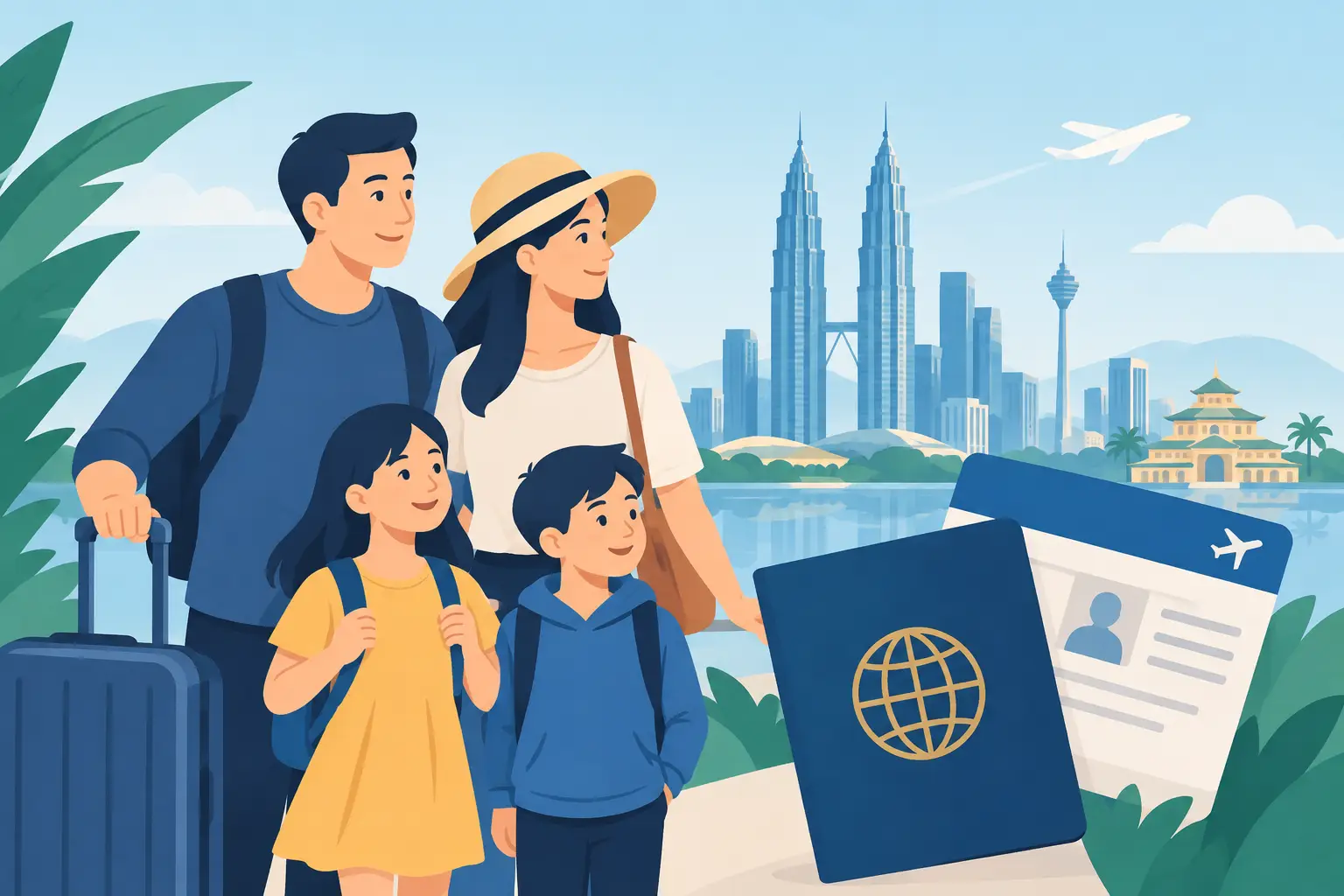
A successful move to Malaysia is rarely an individual decision. A spouse may be planning a new routine, children may need continuity in their education, and parents may need to remain close to the family. An MM2H dependent visa application is therefore not an administrative afterthought. It should be prepared alongside the principal applicant’s MM2H application, with the same care given to financial eligibility, supporting documents and long-term plans.
Malaysia My Second Home provides a long-term residency route for eligible foreign nationals who wish to make Malaysia a second home. The programme can support a family-based lifestyle, but every dependent must be correctly declared, documented and processed in line with the prevailing MM2H rules. Early planning reduces the risk of avoidable delays, additional document requests or unexpected costs after approval.
Who Can Be Included in an MM2H Dependent Visa Application?
The principal applicant is the person applying under an MM2H package and meeting its financial, residency and programme conditions. Dependants are family members connected to that principal applicant who may be included under the programme, subject to the eligibility criteria in force at the time of submission.
A legally married spouse is commonly included. Children may also qualify, although the applicable age limits, marital status requirements and evidence of dependency must be checked carefully. In certain circumstances, parents and parents-in-law may be considered as dependants, subject to programme provisions and the required supporting evidence.
The practical lesson is simple: do not assume that a family member qualifies merely because they will live with you in Malaysia. Immigration authorities assess each dependent according to the programme rules and the documents presented. A child approaching an age threshold, an adult child with a special dependency circumstance, or a parent joining the household may require particular attention before the application is submitted.
Documents That Need Early Attention
Dependent applications often take longer than expected because family documents are held in different countries, issued under former names or require formal certification. The principal applicant’s paperwork establishes eligibility for MM2H, while dependent documents establish the family relationship and identity of every person being added.
The usual documentation may include valid passports, passport photographs, marriage certificates and birth certificates. Where a name differs across documents, supporting evidence such as a deed poll, marriage record or official name-change document may be needed. Depending on the nationality of the applicants and the documents involved, certification, legalisation or translation into English may also be required.
For parents or parents-in-law, relationship records must clearly connect them to the principal applicant or spouse. For children, ensure the birth certificate reflects the relevant parentage and that passport details are current. Where custody, adoption or guardianship is involved, obtain the applicable legal documents early rather than waiting until the file is ready for submission.
Medical insurance is another important planning point. MM2H participants are generally expected to satisfy applicable medical insurance requirements, subject to any permitted exemptions. The insurance arrangement must cover the right people, meet the required conditions and remain appropriate as family circumstances change. It is sensible to consider this alongside school costs, property plans and healthcare preferences, rather than treating it as a final visa formality.
Fees and Financial Planning for Family Applications
Adding dependants changes the overall cost of an MM2H application. The principal applicant’s package selection and fixed-deposit obligations are only part of the financial picture. A family budget should also allow for dependent application charges, visa or pass-related fees, security bond requirements, medical insurance and professional application-management fees where an agent is appointed.
The exact amounts can vary according to nationality, number of dependants, applicable package and current government requirements. Security bond levels, for example, may differ by nationality. It is wise to obtain a full itemised estimate before deciding whether to include all eligible family members at the outset or whether a later application is more suitable.
There can be genuine trade-offs. Applying together may make practical sense where the entire family will relocate at the same time and all documents are available. It can also support a more coordinated move, especially where a property purchase, school enrolment or household relocation is already planned. However, if a dependent’s documents are incomplete or a child will remain overseas for education, it may be better to assess the timing carefully rather than submit a weak or rushed file.
Cost transparency matters because an MM2H application involves several different categories of charges. Government charges are not the same as agency fees. Visa-related fees, security bonds, insurance premiums and dependent charges should likewise be identified separately. This gives families a realistic view of the commitment before they proceed.
Timing the Family’s Move to Malaysia
An MM2H approval process involves document collection, application preparation, government assessment, conditional approval steps and pass endorsement arrangements. The timeline is not solely within an applicant’s control, and families should avoid setting immovable moving dates before their documentation and approvals are properly in place.
If children will attend school in Malaysia, start the education discussion early. International and private school admission cycles, assessment requirements and availability can affect your ideal arrival date. Families relocating with older children should also consider how a move may affect examination schedules, university applications and language support.
Property decisions deserve similar care. MM2H can complement plans to own a Malaysian home, but visa approval, property purchase and physical relocation are separate processes with their own timelines and requirements. Some families prefer to rent first, giving them time to understand neighbourhoods, commute patterns and school locations. Others have a clear preference for a second home in Kuala Lumpur, Penang, Johor or a resort location. The right approach depends on how often the family expects to be in Malaysia and whether the property will be a primary base or a holiday residence.
Common Problems That Delay Dependent Applications
Most delays are preventable. They usually arise from documents that do not match, expired passports, incomplete relationship evidence or an assumption that a dependent can be added without separate checks. A marriage certificate issued in a language other than English, a birth certificate showing an abbreviated name, or a passport renewed midway through preparation can all create questions that need to be resolved.
Another common issue is leaving dependent planning until after the principal application is underway. This can create a fragmented process and may affect the family’s ability to travel, enrol children or arrange accommodation together. Where possible, discuss every family member’s situation at the beginning, even if the final decision is to apply later for one person.
Applicants should also be cautious about relying on informal advice from friends or outdated online discussions. MM2H conditions, fees and administrative procedures can change. What worked for another family under an earlier programme structure may not apply to a new application.
How Professional MM2H Support Helps
A specialist MM2H adviser can review whether each intended dependent is suitable for inclusion, identify document gaps and explain the likely cost structure before formal preparation begins. This is particularly valuable for internationally mobile families whose certificates, passports and financial records originate from more than one jurisdiction.
Jasajutera Development (MM2H) Sdn Bhd is licensed by the Ministry of Tourism, Arts and Culture under licence MM2H 0941 and focuses exclusively on MM2H applications. The process begins with a private assessment of the principal applicant’s plans, chosen package and family composition. From there, the application can be organised around document requirements, government submissions, visa-related steps, dependent matters and relocation planning.
A disciplined application process does not remove every external variable, but it gives your family a clearer route forward. Before making travel bookings, school commitments or property decisions, establish exactly who will apply, what evidence is required for each person and what the full financial commitment is likely to be. That preparation allows Malaysia to feel less like a complicated immigration project and more like the well-planned second home your family intends to enjoy.
4 comments